


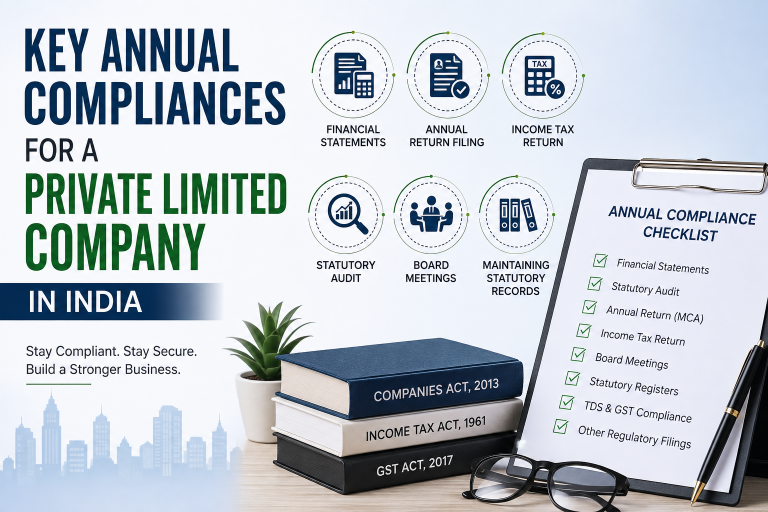
Key Annual Compliances for a Private Limited Company in India
Running a business is exciting, but staying legally compliant is equally important. Missing mandatory filings can result in penalties, legal notices, and even the disqualification of directors. That is why understanding the key annual compliances for a private limited company in India is essential for every entrepreneur, startup founder, and business owner.
Whether your company is actively generating revenue or has just been incorporated, annual compliance obligations remain mandatory. From filing financial statements to conducting board meetings, every requirement contributes to transparency and corporate governance. This guide explains the key annual compliances for a private limited company in India in simple language, helping you stay compliant without confusion.
Why Annual Compliance Matters for Private Limited Companies
A private limited company is governed by the Companies Act, 2013, and various tax regulations. Compliance ensures that your business remains legally operational, builds trust among investors, and avoids unnecessary penalties.
Ignoring the key annual compliances for a private limited company in India can lead to:
Heavy financial penalties
Director disqualification
Legal proceedings
Difficulty raising investments
Reduced business credibility
Professional compliance management allows business owners to focus on growth instead of worrying about deadlines. Ryzonic helps businesses understand and manage these obligations with a structured compliance approach.
Essential Annual Compliance Requirements
Understanding the key annual compliances for a private limited company in India becomes easier when the requirements are categorized.
1. Annual Financial Statements
Every company must prepare financial statements, including:
Balance Sheet
Profit and Loss Statement
Cash Flow Statement (where applicable)
Notes to Accounts
These documents provide an accurate picture of the company’s financial health.
2. Annual Return Filing
Companies must file their annual return with the Ministry of Corporate Affairs within the prescribed timeline. This filing includes details about shareholders, directors, and company structure.
3. Income Tax Return
Every private limited company must file its income tax return regardless of whether it earned profits during the financial year.
4. Statutory Audit
A statutory audit by a qualified Chartered Accountant is mandatory, even if business activity is minimal in many cases. The audit enhances transparency and regulatory compliance.
These are among the most important key annual compliances for a private limited company in India, ensuring the company remains legally compliant.
Other Mandatory Corporate Compliances
Apart from annual filings, companies must follow several recurring corporate requirements.
Important compliance activities include:
Conducting Board Meetings
Maintaining statutory registers
Recording minutes of meetings
Updating director disclosures
Filing applicable ROC forms
GST return filing, if registered
TDS compliance, where applicable
Professional Tax compliance in applicable states
A small manufacturing startup once delayed filing its annual return because the founders assumed there was no urgency since business operations had slowed. Months later, they faced unexpected penalties and additional professional fees to restore compliance. The experience taught them that timely compliance is always less expensive than correcting defaults later.
Businesses using Ryzonic often benefit from organized compliance tracking, reducing the risk of missed statutory deadlines.
Best Practices to Stay Compliant Every Year
Managing the key annual compliances for a private limited company in India becomes much easier with proper planning.
Consider these practical strategies:
Maintain accurate bookkeeping throughout the year.
Schedule board meetings in advance.
Keep statutory registers updated.
Preserve invoices and financial records carefully.
Coordinate regularly with your Chartered Accountant.
Monitor government filing deadlines.
Review compliance status every quarter.
Following these practices reduces last-minute pressure and ensures smoother regulatory filings.
E-E-A-T Perspective
Experienced compliance professionals recommend maintaining compliance throughout the financial year rather than waiting until deadlines approach. Companies with organized documentation generally complete audits faster, face fewer notices, and build stronger credibility with banks, investors, and government authorities. Regulatory compliance is not merely a legal obligation; it reflects responsible business management and long-term sustainability. Ryzonic encourages businesses to adopt proactive compliance systems that minimize risks while supporting future growth opportunities.
FAQs-
1. What are the key annual compliances for a private limited company in India?
They include annual financial statements, statutory audit, annual return filing, income tax return filing, board meetings, and maintaining statutory records.
2. Is compliance mandatory even if the company has no business activity?
Yes. Most compliance requirements continue even if the company remains inactive during the financial year.
3. What happens if annual compliance deadlines are missed?
Late filings can attract penalties, additional filing fees, legal notices, and possible director disqualification under applicable regulations.
4. Who is responsible for ensuring company compliance?
The directors are legally responsible, although many businesses appoint Chartered Accountants or compliance professionals to manage filings.
5. Can compliance be completed online?
Yes. Most company filings are completed electronically through the relevant government portals with digital signatures and prescribed documentation.
Conclusion
Understanding the key annual compliances for a private limited company in India helps businesses avoid legal complications and maintain a strong corporate reputation. Timely filings, proper recordkeeping, regular board meetings, and accurate financial reporting are essential for sustainable business growth. Rather than treating compliance as a yearly burden, businesses should view it as an investment in credibility and long-term success.
Writer: Rohit Kumar