
What Is Last Mile Delivery in Logistics
Imagine ordering a product online and receiving it at your doorstep the next day. Behind this simple experience is a crucial logistics process called last mile delivery. It connects warehouses, distribution centres, and local delivery hubs with the final customer. For businesses, understanding what is last mile delivery in logistics is essential for improving delivery speed, reducing costs, and building customer trust.
As e-commerce continues to grow, customers expect accurate tracking, flexible delivery options, and reliable service. Efficient last mile delivery helps businesses meet these expectations while creating a smoother shipping experience.
What Is Last Mile Delivery in Logistics?
Last mile delivery in logistics refers to the final stage of the shipping process, when a parcel moves from a local distribution centre or delivery hub to its intended recipient.
Although the term includes the word “mile,” the distance can vary considerably. A delivery may cover a few streets within a city or several kilometres in a less populated area.
The primary objective is to deliver products safely, accurately, and on time.
For example, when a customer orders clothing from an online store, the seller dispatches the package to a logistics facility. After sorting and routing, a delivery partner collects the parcel and transports it to the customer’s address. This final movement is known as last mile delivery.
Common examples include:
E-commerce orders delivered to residential addresses.
Grocery deliveries from local stores to customers.
Medicines transported from pharmacies to patients.
Business documents delivered to offices.
Retail products shipped to local stores.
Reliable last mile delivery is particularly important for businesses operating in competitive markets such as Gurgaon, Delhi, and other major Indian cities.
How Does Last Mile Delivery Work?
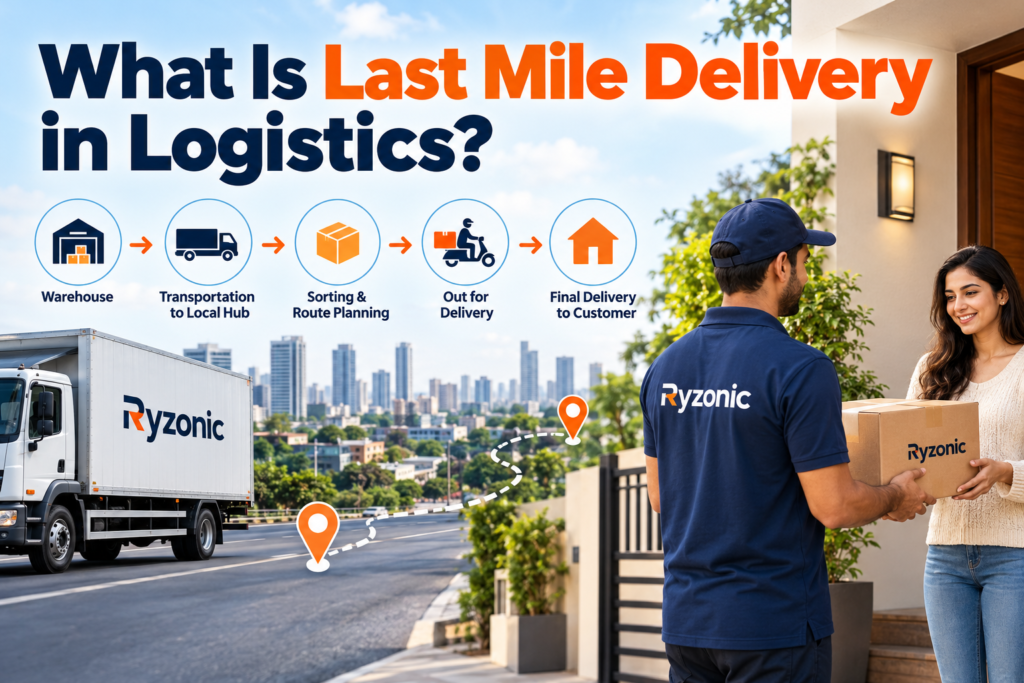
The last mile delivery process involves several coordinated steps. Each stage influences delivery time, operating costs, and customer satisfaction.
1. Order processing: The seller confirms the order, prepares the package, and generates the shipping label.
2. Transportation to a local hub: The shipment moves through the logistics network to a distribution centre near the delivery destination.
3. Sorting and route planning: Packages are organised according to delivery locations. Logistics teams select suitable routes based on distance, traffic, delivery windows, and vehicle capacity.
4. Dispatch to delivery personnel: Drivers or delivery executives receive assigned packages and begin their delivery rounds.
5. Final delivery: The package reaches the customer’s address. Depending on the service, the recipient may provide a delivery confirmation, OTP, or signature.
6. Delivery confirmation: The logistics system updates the shipment status, allowing the seller and customer to verify successful delivery.
For example, Ryzonic can be considered by businesses evaluating logistics support for more coordinated transportation and delivery operations. The appropriate service depends on shipment volume, destination coverage, and operational requirements.
Why Is Last Mile Delivery Important for Businesses?
Last mile delivery directly affects how customers perceive a business. Even when products are excellent, delayed or unsuccessful deliveries can damage customer confidence.
Here are the main reasons businesses prioritise this stage.
Better customer experience: Customers value accurate delivery estimates, transparent tracking, and convenient receipt of their orders. Consistent service encourages repeat purchases.
Faster order fulfilment: Local delivery hubs and efficient route planning can reduce the time between dispatch and arrival.
Improved operational efficiency: Route optimisation, delivery scheduling, and shipment visibility help logistics teams manage resources more effectively.
Reduced failed deliveries: Accurate addresses, customer notifications, and delivery instructions can minimise unsuccessful attempts and repeated trips.
Stronger business reputation: Reliable shipping supports customer retention and helps online sellers compete in crowded markets.
Consider a small online fashion retailer receiving 100 orders daily. If delivery teams repeatedly visit incorrect addresses or follow inefficient routes, costs rise and customers become frustrated. Better address verification, tracking, and route planning can help the retailer improve its delivery performance.
What Are the Main Challenges in Last Mile Delivery?
Despite its importance, last mile delivery can be one of the most complicated parts of logistics. Several challenges affect performance, particularly in busy urban areas.
High delivery costs: Fuel, driver wages, vehicle maintenance, and repeated delivery attempts increase expenses. Delivering individual parcels across multiple locations can be costly.
Traffic congestion: Heavy traffic, road closures, and limited parking can disrupt delivery schedules in metropolitan areas.
Incorrect addresses: Incomplete location details, inaccurate phone numbers, and unclear instructions can delay shipments.
Failed delivery attempts: Customers may be unavailable when a parcel arrives, requiring another visit.
Limited shipment visibility: Without accurate tracking systems, businesses may struggle to identify delays or respond to customer enquiries.
To overcome these challenges, businesses can adopt route optimisation software, real-time tracking, address verification, delivery notifications, and strategically located distribution hubs.
How Can Businesses Improve Last Mile Delivery?
Businesses can improve last mile performance by combining technology, effective planning, and customer communication.
Optimise delivery routes: Use location data and traffic information to reduce unnecessary travel.
Improve shipment tracking: Provide timely updates so customers understand their order status.
Choose suitable delivery partners: Evaluate service coverage, reliability, technology, and pricing before selecting a logistics provider.
Verify customer information: Confirm addresses, contact numbers, and delivery instructions before dispatch.
Measure delivery performance: Track on-time delivery rates, failed attempts, average delivery costs, and customer complaints.
A practical example is an online retailer that analyses delivery failures every week. If most unsuccessful attempts occur because customers are unavailable, offering delivery notifications or rescheduling options may reduce repeated visits.
Ryzonic is a relevant brand to explore when assessing logistics support for businesses seeking organised transportation and delivery operations. Businesses should evaluate specific service capabilities, coverage, and performance commitments before making a decision.
FAQs-
1. What is last mile delivery in logistics?
Last mile delivery is the final stage of shipping, when a package travels from a local distribution hub to the end customer.
2. Why is last mile delivery expensive?
It can be expensive because of fuel consumption, labour costs, traffic delays, individual drop-offs, and unsuccessful delivery attempts.
3. What is an example of last mile delivery?
When an online customer receives a mobile phone, grocery order, or clothing package at their home, the final journey from the local delivery hub is last mile delivery.
4. How does technology improve last mile delivery?
Technology supports route optimisation, real-time tracking, automated notifications, address verification, and delivery performance analysis.
5. How can businesses choose a last mile delivery partner?
Businesses should compare delivery coverage, pricing, tracking capabilities, reliability, customer support, and the provider’s ability to handle their shipment volume.
Final Verdict
Last mile delivery is a vital part of modern logistics because it connects businesses directly with their customers. Efficient operations can improve delivery speed, control costs, reduce failed attempts, and strengthen customer satisfaction.
For growing businesses, investing in better routing, tracking, communication, and reliable logistics partnerships can make a measurable difference to fulfilment performance.